
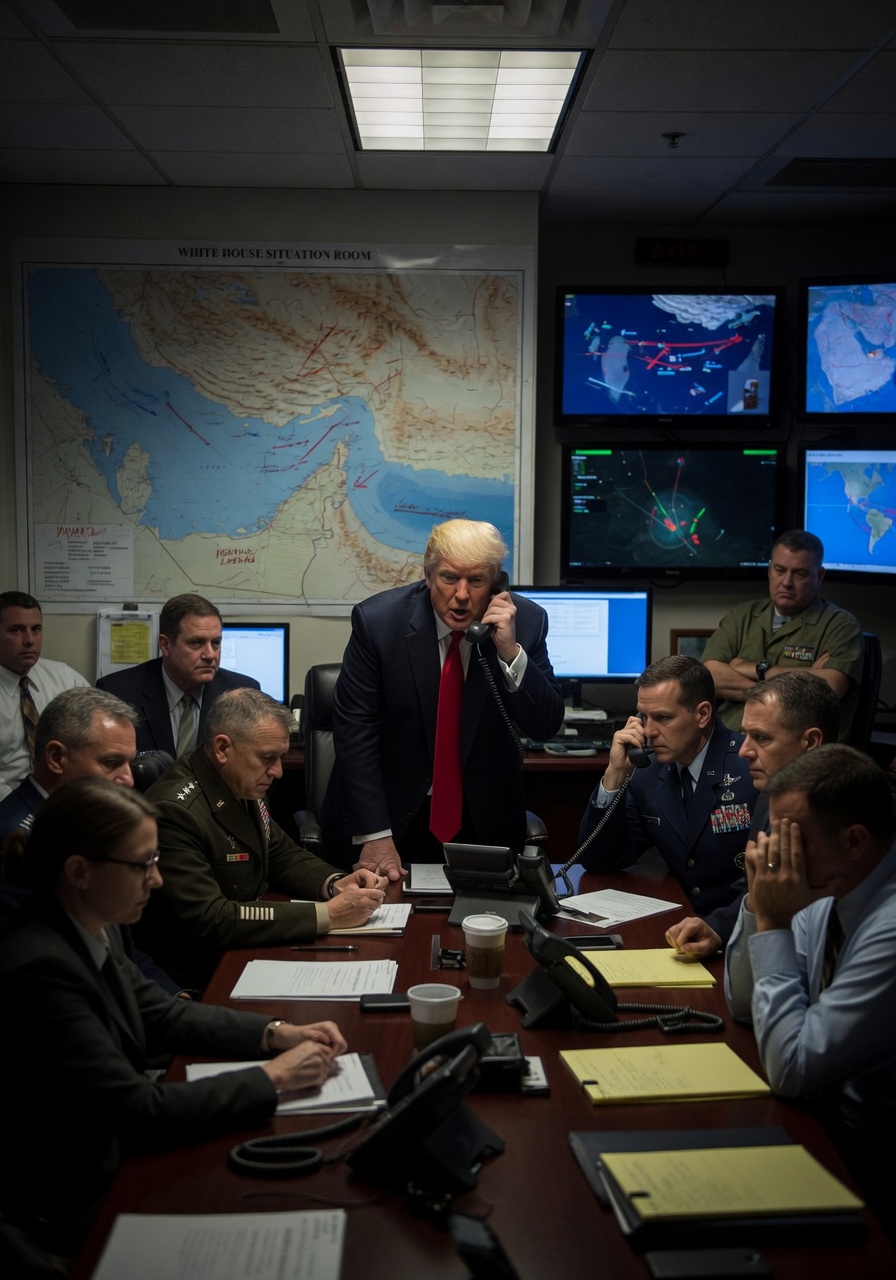
Trump Signals Lifting of Hormuz Blockade as Iran Deal Nears Final Call
President Donald Trump announced Friday that the US Navy is preparing to lift its naval blockade of the Strait of Hormuz, a critical chokepoint for global oil shipments, as he heads into the Situation Room to render what he described as a "final determination" on a potential deal with Iran.
The Announcement and Immediate Context
In a statement released via social media and echoed in video remarks, Trump highlighted the blockade's role in pressuring Tehran while outlining conditions for its removal. He emphasized demands that Iran forgo nuclear weapons, ensure unrestricted shipping through the strait, clear remaining naval mines, and allow international oversight for the destruction of its enriched uranium stockpiles. Ships previously affected by the blockade, he noted, could soon begin returning home.
The move comes amid reports of advanced but fragile negotiations following months of heightened tensions in the Persian Gulf. A photo shared alongside the announcement appeared to capture Iranian officials in discussions, underscoring the high-stakes diplomatic maneuvering underway.
Background: The 2026 Iran Conflict and Blockade
The current standoff traces its roots to early 2026, when Iran effectively closed the Strait of Hormuz to commercial traffic in late February amid escalating regional hostilities. The waterway, which carries roughly a quarter of the world's seaborne oil trade, became a flashpoint after failed talks in Islamabad.

On April 13, 2026, the United States imposed its own naval blockade in response, directing the US Navy under Central Command to intercept vessels attempting to enter or leave Iranian ports. The operation, described by officials as encompassing Iran's entire coastline, redirected over 100 commercial ships by mid-May and involved significant military resources, including more than 15,000 US troops at peak.
Trump had previously threatened strikes on Iranian fast-attack vessels and criticized Tehran for alleged extortion tactics involving passage fees. The blockade marked a sharp escalation from earlier cease-fire efforts that had left the region in a tense limbo.
Strategic Importance of the Strait of Hormuz
Stretching between Iran and Oman, the Strait of Hormuz serves as the sole maritime outlet for oil from the Persian Gulf, making it one of the world's most vital energy arteries. Disruptions here have historically sent shockwaves through global markets, with even temporary closures capable of spiking prices and straining supply chains.
During the recent blockade, oil prices fluctuated amid uncertainty, while shipping companies rerouted vessels at considerable cost. Analysts note that reopening the strait without tolls or Iranian control—as Trump has insisted—could ease energy pressures but would require verifiable security guarantees to prevent future interference.
Key Demands and Negotiation Dynamics
Trump's conditions for a deal include a permanent ban on Iranian nuclear weapons development, immediate and toll-free access for all shipping, removal of mines, and supervised elimination of enriched uranium reserves. Iranian officials, including Foreign Minister Araghchi, have reportedly pushed for alternative management mechanisms, while hardliners within the regime have issued warnings of military responses if pressure continues.

Public statements from Tehran have mixed defiance with signals of flexibility, reflecting internal divisions. Senior figures such as Mohsen Rezaei and IRGC Commander Ahmad Vahidi have referenced potential "direct action" if the blockade persists, even as diplomatic channels remain open.
Reactions from Markets, Allies, and Experts
Financial markets reacted with cautious optimism to the announcement, with energy traders eyeing potential relief in crude futures. Some analysts described the development as a possible "peace premium" reversal, though skepticism remains high given repeated past assurances that failed to materialize.
International observers, including those monitoring from the Middle East, highlighted the leverage the blockade has exerted on Iran's economy, estimated by some US officials at hundreds of millions of dollars daily in lost revenue. Experts on nuclear nonproliferation stressed that any agreement must include robust verification mechanisms to address long-standing concerns over Tehran's nuclear program.
Broader Implications and Path Forward
A successful resolution could stabilize global energy markets and reduce the risk of wider conflict involving regional actors. However, unresolved issues such as Iran's ballistic missile capabilities and regional influence operations remain contentious.
Looking ahead, attention will focus on whether Tehran formally accepts the outlined terms and how implementation of mine clearance and uranium oversight proceeds. Any deal would likely require coordination with allies and monitoring by international bodies to ensure compliance.
Disclaimer: This content is aggregated from verified external sources for global news and information purposes only.