
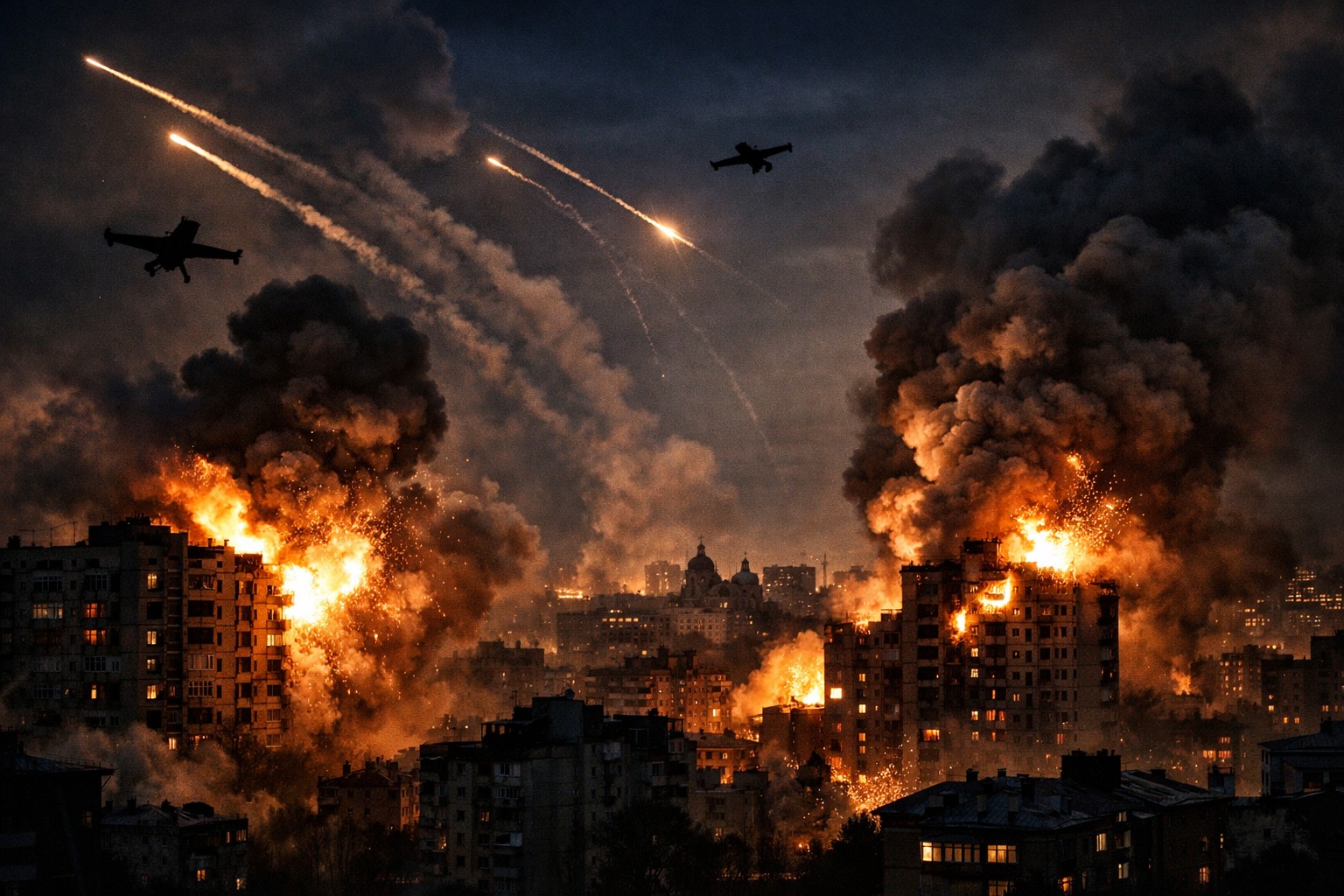
Russian Strikes Hit Kyiv, Dnipro and Kharkiv After Days of Warning
Russian missiles and drones struck several of Ukraine’s biggest cities early on June 2, killing at least five people and wounding dozens more, according to Ukrainian authorities, in an attack that came after days of official warnings that Moscow was preparing a heavier new assault. Explosions were reported in Kyiv, Dnipro and Kharkiv, with emergency crews pulling residents from damaged buildings and firefighters battling blazes before dawn. The strikes underscored how, more than two years after Russia’s full-scale invasion, urban centers far from the front remain exposed to waves of air attacks that can arrive with little warning.
Predawn Barrage Across Cities
Ukrainian officials said Russia launched a coordinated overnight barrage involving missiles and attack drones aimed at major population centers. In the capital, air defence units were activated as residents took shelter during repeated alerts, while local authorities reported damage to residential districts and civilian infrastructure. In Dnipro and Kharkiv, regional officials described explosions, fires and casualties, with hospitals receiving the wounded as day broke.
The reported death toll stood at at least five early in the day, though officials have often warned that casualty figures can rise as rescue crews search damaged structures. Dozens of people were reported injured across the affected cities. Ukrainian emergency services published images showing apartment blocks with shattered facades, charred vehicles and rescue workers carrying survivors through debris-strewn streets.
The assault followed repeated statements from Ukrainian military and political leaders that Russia was positioning aircraft, missiles and drones for another large-scale strike campaign. Such warnings have become more frequent as Moscow intensifies pressure along the front and seeks to strain Ukraine’s air defences, electricity system and public morale.
Kyiv Braces for More
In Kyiv, city and military administrators said air defence systems engaged incoming targets during the night, while debris from interceptions and direct impacts caused damage in several districts. Residents described the familiar sequence of sirens, explosions and anti-aircraft fire that has become a feature of life in the capital during periods of intensified bombardment. Local officials urged people to remain in shelters until alerts were lifted.
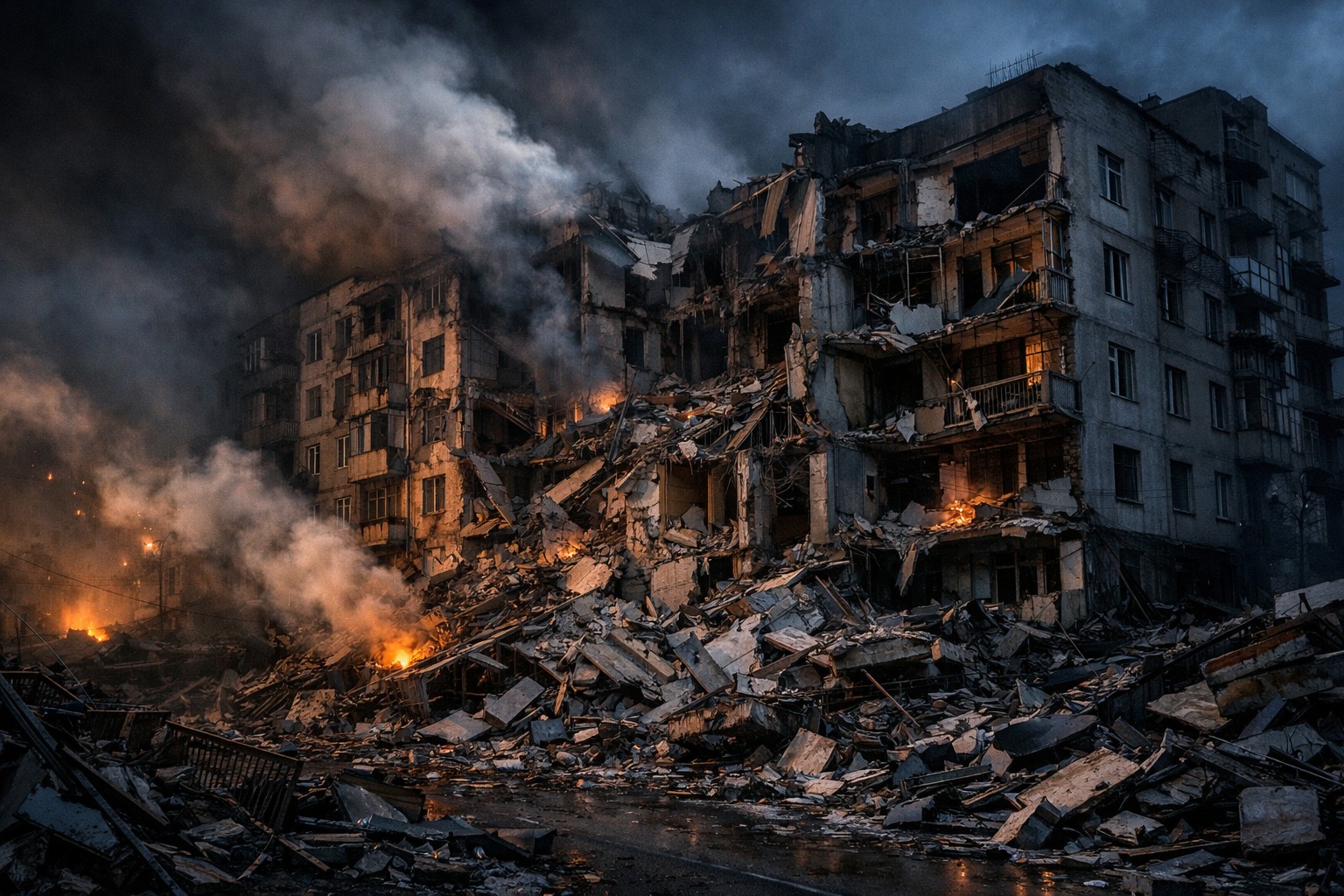
“Another difficult night for the capital,” Kyiv officials said in statements carried by Ukrainian media, as emergency teams responded to multiple sites hit by falling debris and blast waves.
Kyiv has remained a symbolic and strategic target for Russia throughout the war. Although the capital is protected by some of Ukraine’s strongest air defence systems, officials have repeatedly said even successful interceptions can produce deadly debris and that no shield is absolute when attacks come in large numbers and in mixed formations.
Military analysts say Russia has increasingly combined cruise missiles, ballistic missiles and Iranian-designed Shahed-type drones in an effort to overwhelm Ukrainian defences. The tactic forces Ukraine to spread scarce interceptor missiles across several axes at once, often during attacks timed for the early hours when civilians are most vulnerable.
Kharkiv and Dnipro Under Pressure
Kharkiv, Ukraine’s second-largest city, has faced some of the heaviest Russian bombardment of the war because of its proximity to the border. In recent months the city has endured repeated strikes on apartment buildings, energy facilities and transport links, prompting fresh evacuations in surrounding areas and renewed appeals from President Volodymyr Zelenskiy for more Western air defence systems. Dnipro, a key logistical and industrial hub in central-eastern Ukraine, has also come under regular attack.
The latest strikes added to mounting concerns that Russia is trying to stretch Ukrainian resources across several fronts at once. Kharkiv region in particular has been under acute pressure since Russia opened a new cross-border offensive there in May 2024, forcing Kyiv to redeploy troops and exposing vulnerabilities in local defences. Dnipro’s role as a transport and medical hub for wounded soldiers and displaced civilians has made it a recurring target in Moscow’s campaign.
- Kharkiv lies less than 40 km from the Russian border, leaving little warning time against certain missile launches.
- Dnipro has become a key rear-area city for logistics, industry and treatment of war casualties.
- Kyiv remains politically central and symbolically powerful, making it a frequent target during major strike waves.
Officials in the affected regions urged residents not to ignore sirens, saying Russian forces have shown a pattern of launching follow-up attacks after first responders arrive. That threat has complicated rescue efforts across the country and added another layer of risk for emergency workers already operating under constant pressure.
A Campaign of Attrition
The strikes fit a broader Russian strategy that has evolved since the war’s early failed push to seize Kyiv. Unable to break Ukraine through a rapid ground assault, Moscow has leaned heavily on long-range attacks to wear down the country’s economy, power grid, defence industry and public stamina. Energy infrastructure has been a particular focus since 2022, with renewed waves of attacks in 2024 causing blackouts and forcing emergency power restrictions in many regions.
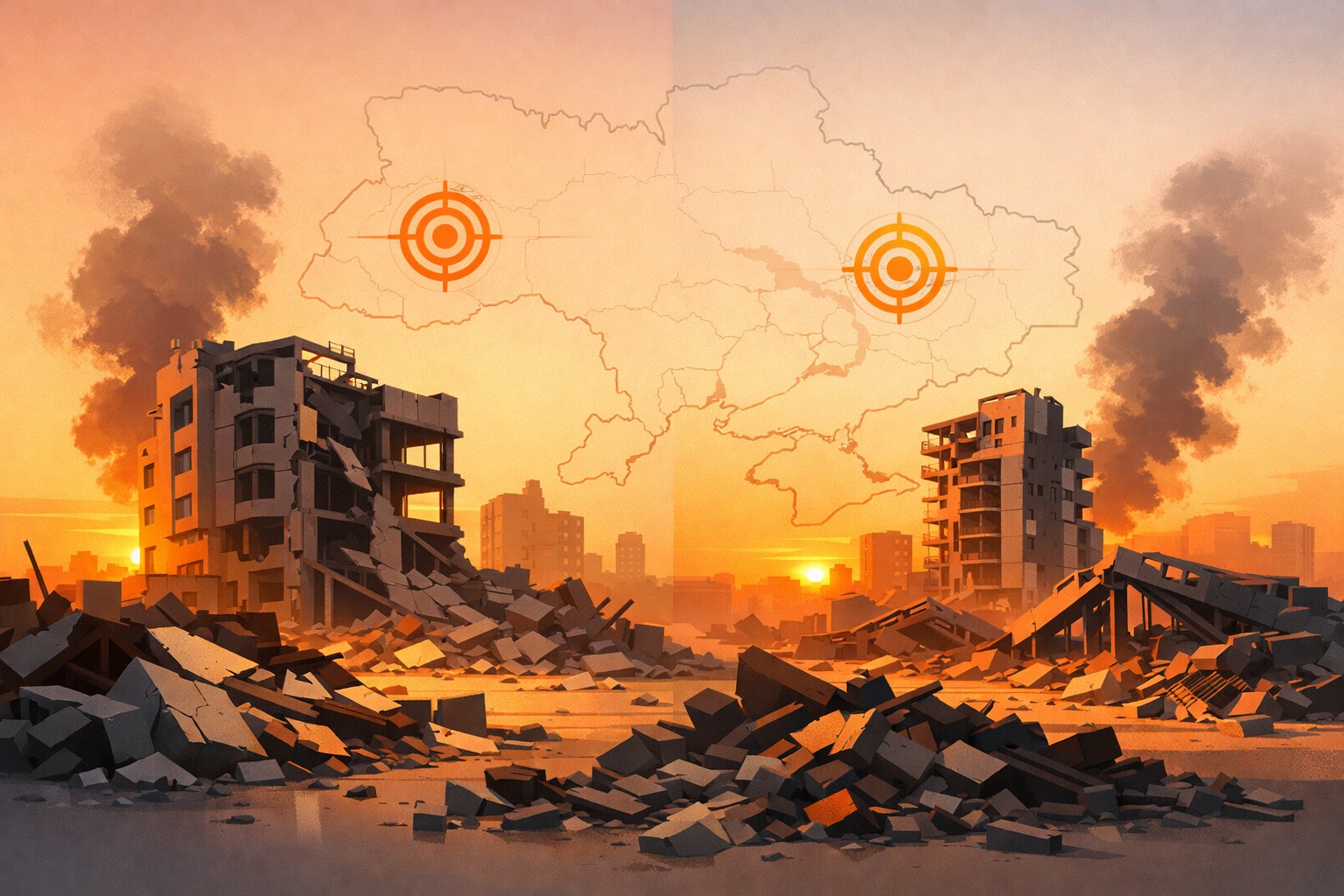
According to Ukrainian officials and international monitoring groups, Russia has launched thousands of missiles and drones at civilian and critical infrastructure targets since the full-scale invasion began in February 2022. Moscow says it does not deliberately target civilians, but repeated strikes on homes, hospitals, schools and energy sites have killed large numbers of non-combatants and drawn condemnation from the United Nations and Western governments.
“The pattern of attacks on densely populated urban areas raises serious concerns under international humanitarian law,” U.N. officials and rights monitors have said repeatedly in assessments of Russian strike campaigns.
Russia has expanded domestic drone production and adapted procurement chains to sustain pressure despite sanctions. Ukrainian officials say that means major air raids can now come more often and in larger numbers, even as both sides race to innovate with cheaper drones, electronic warfare and dispersed launch tactics.
Air Defence Supplies Tested
The latest attacks came as Ukraine continues to press allies for additional air defence systems, including more Patriot batteries and interceptor missiles. Zelenskiy and senior commanders have argued for months that the country’s most urgent military need is the ability to protect cities, troops and power infrastructure from ballistic and cruise missile strikes. Western support has helped Ukraine blunt many attacks, but officials say ammunition shortages and the sheer scale of Russian barrages remain major constraints.
Ukraine’s partners have announced new packages over the past year, yet delivery timelines and production bottlenecks have become a central issue. European officials have acknowledged that industrial output has struggled to keep pace with battlefield consumption rates, while U.S. military aid was delayed for months by political wrangling before a major package was approved in April 2024. That gap, Ukrainian officials say, gave Russian forces an opening both at the front and in the air.
“Air defence is not just military equipment; it is protection for millions of people,” Zelenskiy has said in repeated appeals to allies.
Analysts say the immediate problem is not only the number of launchers but the availability of interceptors for different threat types. Ballistic missiles, cruise missiles and one-way attack drones all require different responses, and defending every city all the time is impossible even for wealthier states. Ukraine has therefore had to prioritize around critical infrastructure, front-line logistics and the largest urban centers, leaving other areas more exposed.
Civilians Bear the Burden
For ordinary Ukrainians, the strategic logic of the air war is measured in sleepless nights, damaged homes and recurring trauma. Families across the country have grown used to keeping documents, water, medicine and phone chargers ready beside the door in case of another overnight alarm. Schools, hospitals and businesses have adapted with shelters and backup power, but each new barrage revives the uncertainty that has shaped civilian life since the invasion began.
Kharkiv offers perhaps the starkest example. The city has remained under near-constant threat because of its location, with officials describing an exodus from some border communities and relentless attacks on energy and transport systems. In Kyiv, where daily life often appears more stable, sudden mass assaults serve as a reminder that even the capital’s relative normality rests on a fragile defensive shield.
- Millions of Ukrainians continue to face recurring blackouts linked to attacks on power facilities.
- Air raid alerts can last for hours, disrupting work, education and sleep.
- Emergency services warn that repeated strikes increase the risk to rescuers and medical teams.
International humanitarian agencies say prolonged exposure to air attacks has had cumulative psychological effects, especially on children and older residents. Aid groups working in eastern and central Ukraine report persistent demand for trauma support, housing repairs and emergency cash assistance.
The Front Line Connection
The timing of the June 2 strikes also reflects the growing link between developments in the skies and conditions on the battlefield. Russia has sought to exploit manpower and ammunition advantages in several sectors, while using long-range strikes to complicate Ukraine’s ability to move reserves, repair weapons and sustain industrial output. By hitting cities such as Dnipro, which function as rear logistics hubs, Moscow can exert pressure beyond the immediate front.
That interplay has become more pronounced as the war settles into a grinding contest of production, adaptation and endurance. Ukraine has expanded its own long-range drone operations against Russian oil facilities, military airfields and infrastructure, showing that both sides increasingly see strategic strikes as an essential complement to trench warfare and artillery duels. Each new barrage is therefore both a military operation and a message about reach, resilience and political will.
Western officials and independent analysts say Russia appears to be probing for weak points before any larger summer push. Whether this latest wave marks the start of a broader campaign or another high-intensity episode in an already relentless air war may become clearer in the coming days. For now, Ukrainian cities remain on alert, with authorities warning residents that further strikes are possible.
Eyes on the Next Wave
Ukraine’s immediate task is rescue and repair, but the broader question is whether its air defences can hold through another sustained period of Russian pressure. Much will depend on the speed of Western deliveries, the condition of Ukraine’s power system and Moscow’s stockpile of missiles and drones. The answer matters not only for battlefield calculations but also for the viability of everyday life in the country’s largest cities.
For residents of Kyiv, Kharkiv and Dnipro, the early-morning attack was another reminder that the war’s tempo can shift without warning. Sirens may fall silent by daylight, but the expectation of the next strike rarely fades. As officials assess the damage and the dead, Ukraine is once again confronting the central reality of this phase of the war: survival depends as much on endurance in the rear as on resistance at the front.
Editor’s note: Casualty figures in fast-moving conflict situations can change as rescue operations continue and authorities update their assessments. This article is based on statements from Ukrainian officials, reporting by Reuters and other publicly available information current as of publication.
Disclaimer: This content is aggregated from verified external sources for global news and information purposes only.