
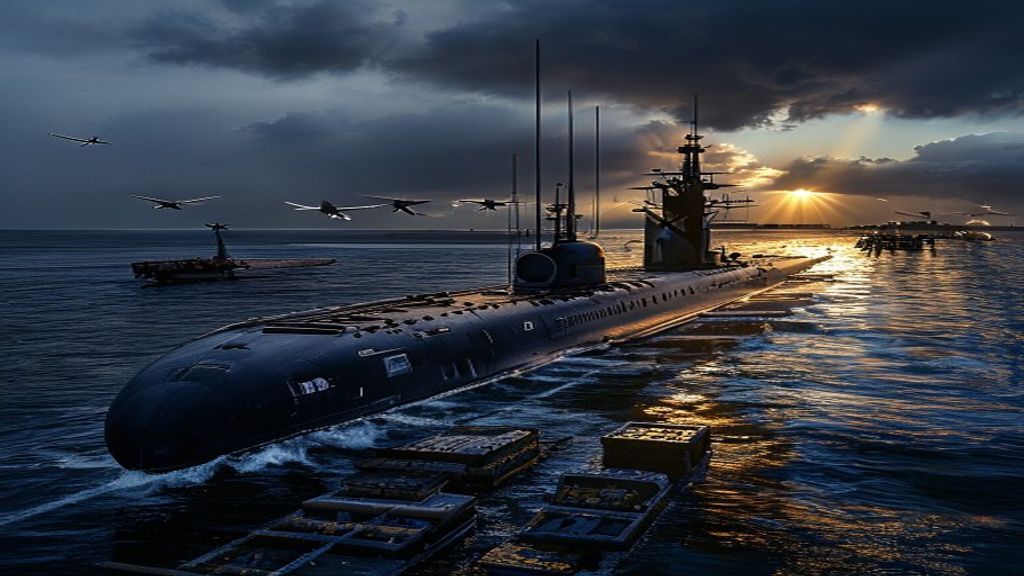
Pentagon Seeks Billions More for China-Focused Military Expansion
The Pentagon has formally requested several billion dollars in additional funding to accelerate a defense buildup explicitly designed to deter or, if necessary, prevail in a conflict with China. The move comes as U.S. military planners intensify preparations for a potential crisis over Taiwan, according to defense officials familiar with the internal budget deliberations.
The Scope of the Defense Funding Request
Defense Department budget documents describe the supplemental ask as covering long-range precision munitions, additional attack submarines, hardened air bases across the Pacific, and expanded stocks of anti-ship missiles. The request builds on the existing Pacific Deterrence Initiative, which Congress has funded at roughly $9 billion annually in recent years. Officials indicate the new tranche could push total Indo-Pacific-focused spending above $15 billion in the next fiscal year.
Procurement priorities include Virginia-class submarine hulls, additional LRASM and SM-6 missiles, and mobile radar systems intended to survive missile barrages. Funding would also support rotational deployments of Marines and Army units equipped with long-range fires to allied territory in Japan, the Philippines, and Australia.
Historical Context of U.S.-China Military Competition
American strategic attention has steadily shifted toward Asia since the Obama administration’s 2011 “rebalance” announcement. Successive defense strategies under both Republican and Democratic administrations have identified China as the pacing challenge. The 2018 National Defense Strategy formally elevated great-power competition above counterterrorism, a posture reaffirmed in the 2022 update.

Taiwan remains the most volatile flashpoint. The island has been self-governing since 1949 but is claimed by Beijing as a renegade province. The United States maintains a policy of strategic ambiguity—neither confirming nor denying whether it would intervene militarily—while supplying Taiwan with defensive arms under the Taiwan Relations Act. Recent Chinese military exercises around the island have grown more frequent and sophisticated, prompting Washington to accelerate contingency planning.
Official Responses and International Reactions
A senior Pentagon spokesperson declined to discuss specific dollar figures but confirmed that “the department is working closely with Congress to ensure resources match strategy.” The White House National Security Council echoed that the request aligns with the administration’s commitment to a free and open Indo-Pacific.
Beijing reacted sharply. Foreign Ministry spokesperson Wang Wenbin accused Washington of “hype” and “interference” in China’s internal affairs, warning that increased U.S. military spending would only heighten regional tensions. Taipei welcomed the development, with Taiwan’s defense ministry stating that closer security cooperation with the United States strengthens deterrence.
Allied capitals offered more measured support. Japanese officials noted the importance of burden-sharing, while Australian defense planners pointed to the AUKUS submarine pact as complementary to the U.S. effort.
Military Strategy and Expert Perspectives
Analysts at the Center for Strategic and International Studies argue that additional munitions stockpiles are critical. A 2023 CSIS wargame series concluded that U.S. and allied forces could exhaust key missile inventories within the first week of a Taiwan conflict. “The industrial base must ramp up production now, not after shots are fired,” said one study author.
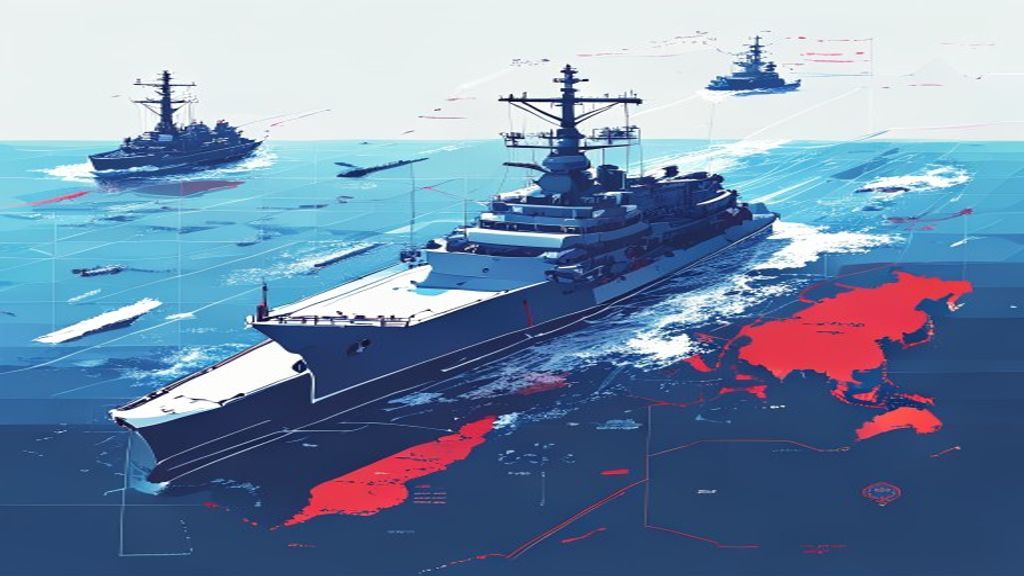
Retired Adm. James Stavridis, former NATO supreme allied commander, emphasized distributed operations: “We cannot rely on a handful of large bases that China can target with ballistic missiles. The new funding supports the kind of dispersal and resilience we need.”
Broader Geopolitical Implications
Expanded U.S. spending is likely to accelerate an arms race dynamic already visible in the region. China’s official defense budget has grown at roughly 7 percent annually for the past decade, though many Western estimates place actual spending higher. Both sides are investing heavily in hypersonic weapons, undersea drones, and space-based surveillance.
Economically, the shift could affect global supply chains. Increased demand for rare-earth minerals and specialized semiconductors—critical for advanced munitions—may strain markets already pressured by export controls. Diplomatically, Southeast Asian nations find themselves navigating between economic ties to China and security partnerships with Washington.
Prospects for Future Developments
Congressional appropriators are expected to take up the request during the annual defense authorization process. Lawmakers from both parties have signaled support for Indo-Pacific funding, though debates over overall spending caps could slow passage. Observers will watch whether the supplemental funds survive negotiations over the debt ceiling and domestic priorities.
Longer term, the Pentagon’s planning assumptions will shape force posture decisions through the 2030s. Key milestones include the first AUKUS submarine deliveries, continued Marine Corps redesign for littoral operations, and the fielding of new long-range cannon systems on allied soil. How Beijing calibrates its own military modernization and diplomatic signaling will largely determine whether deterrence holds or erodes.
Disclaimer: This content is aggregated from verified external sources for global news and information purposes only.