
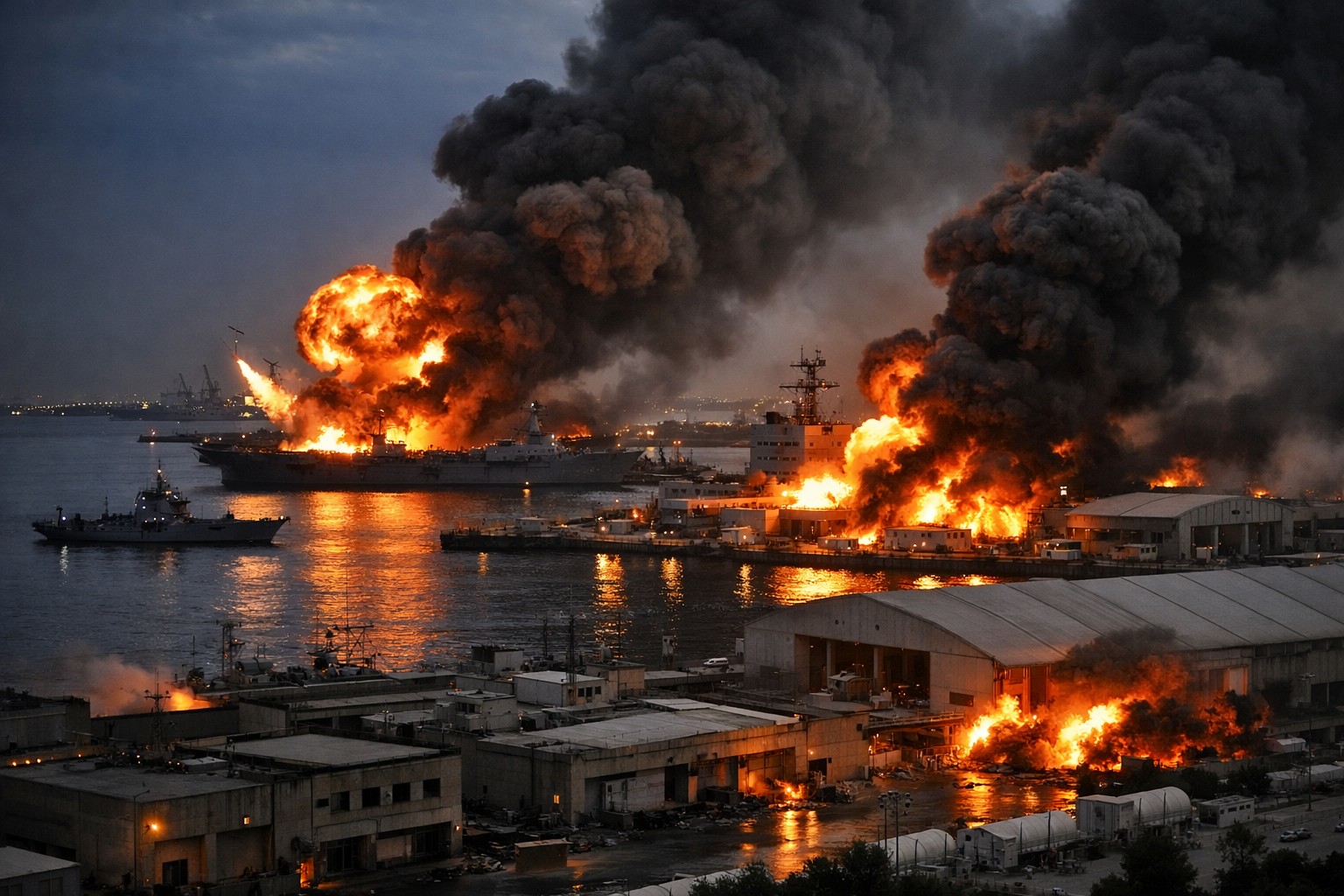
Iran's IRGC Reportedly Strikes US Fifth Fleet HQ in Bahrain
Local media outlets across the Gulf are reporting that Iran's Islamic Revolutionary Guard Corps has launched attacks on the headquarters of the US Fifth Fleet and a nearby airbase, according to a Reuters dispatch citing unconfirmed sources in the region.
IRGC Targets Naval Hub in Manama
The reported strikes focused on facilities in Bahrain, where the Fifth Fleet maintains its primary command center. Early accounts describe missile or drone activity aimed at both administrative headquarters and support infrastructure at an associated airbase.
Confirmation from American military spokespeople remains pending as officials in Washington and Bahrain assess the situation. No casualty figures have been released by either side at this stage.
Regional correspondents noted unusual activity around Manama in the early hours, including emergency vehicle movements near the naval district.
US Fifth Fleet Guards Vital Waterways
Established in 1995, the Fifth Fleet oversees maritime security across the Persian Gulf, Arabian Sea, and Red Sea. Its roughly 20 warships and support vessels routinely patrol the Strait of Hormuz, a narrow passage handling nearly 20 percent of global oil shipments.
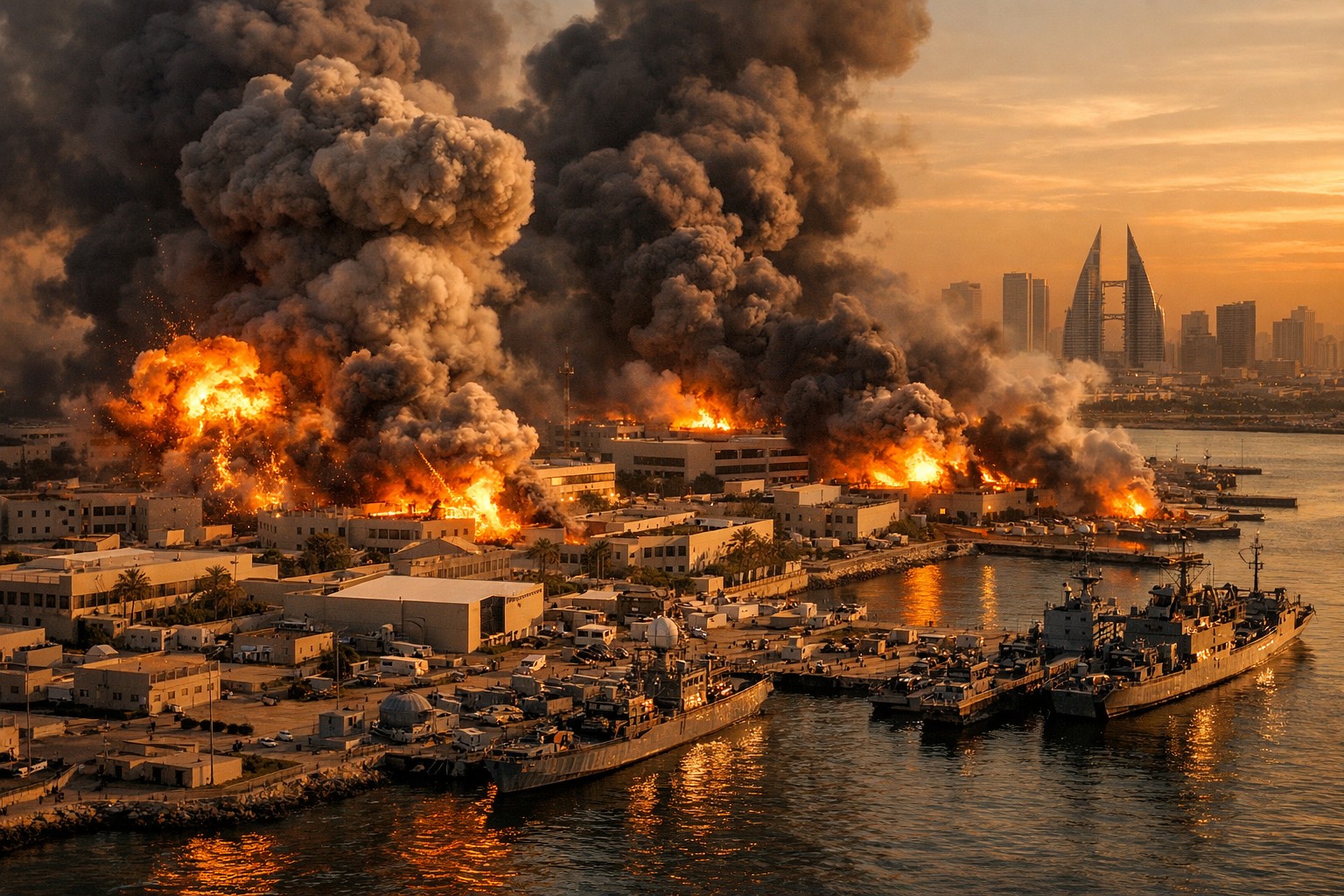
Bahrain has hosted the fleet headquarters since the 1970s under a long-standing defense agreement. The island nation provides critical logistical support and serves as a forward base for operations against piracy and smuggling networks.
Previous incidents, including the 1980s Tanker War and 2019 attacks on commercial shipping, have repeatedly tested the fleet's ability to keep sea lanes open.
Shadow Confrontations Stretch Back Years
Iran and the United States have engaged in a prolonged cycle of indirect and direct pressure since the 1979 revolution. Key flashpoints include the 1988 downing of Iran Air Flight 655, the 2020 killing of Qasem Soleimani, and multiple rounds of tanker seizures in recent years.
The IRGC Navy frequently conducts high-speed boat maneuvers near US vessels, while American forces respond with freedom-of-navigation operations. Both sides have accused the other of crossing red lines in the crowded Gulf waters.
Diplomatic efforts to revive the 2015 nuclear deal have stalled repeatedly, leaving military posturing as the dominant form of communication between the two capitals.
Washington and Allies Coordinate Response
US Central Command has activated its crisis response protocols and is consulting with Bahrain's leadership. Joint statements from Gulf Cooperation Council members are expected within hours.
Any attack on US forces or our partners will be met with appropriate defensive measures, a Pentagon spokesperson said in a brief statement.
European and Asian capitals with commercial interests in the region have urged immediate de-escalation. Several governments are reviewing travel advisories for citizens in Bahrain and neighboring states.
Oil Markets and Shipping React Sharply
Brent crude prices rose more than 4 percent in electronic trading following the initial reports. Traders cited concerns over potential closures or restrictions at the Strait of Hormuz.
Major shipping lines have instructed vessels to increase speed through the Gulf or consider alternative routes around the Arabian Peninsula. Insurance premiums for Gulf transits jumped within minutes of the news.
- At least 15 tankers altered course in the first four hours
- Japanese and South Korean energy importers issued internal alerts
- Global benchmark prices remain volatile pending official confirmation
Analysts Weigh Risks of Broader Clash
Security specialists at major think tanks described the reported attack as a significant departure from previous IRGC actions, which have typically targeted commercial or proxy assets rather than direct US military installations.
If verified, this incident moves the confrontation into a higher-risk category where miscalculation could trigger rapid escalation, noted a senior researcher at a Washington-based defense institute.
Others pointed to Iran's domestic political pressures and recent regional proxy setbacks as possible motives for a show of force. Still, most experts cautioned against assuming a full-scale war is imminent.
Regional Capitals Brace for Fallout
Saudi Arabia and the United Arab Emirates have placed additional air defense units on heightened alert. Both nations maintain close military ties with Washington and fear spillover effects on their own territory.
Iraq and Oman, which have sought to position themselves as mediators in past crises, issued calls for restraint through official channels. Humanitarian agencies in the region are preparing contingency plans for potential displacement or supply disruptions.
Disclaimer: This content is aggregated from verified external sources for global news and information purposes only.