
Iran President Pezeshkian Submits Resignation to Supreme Leader
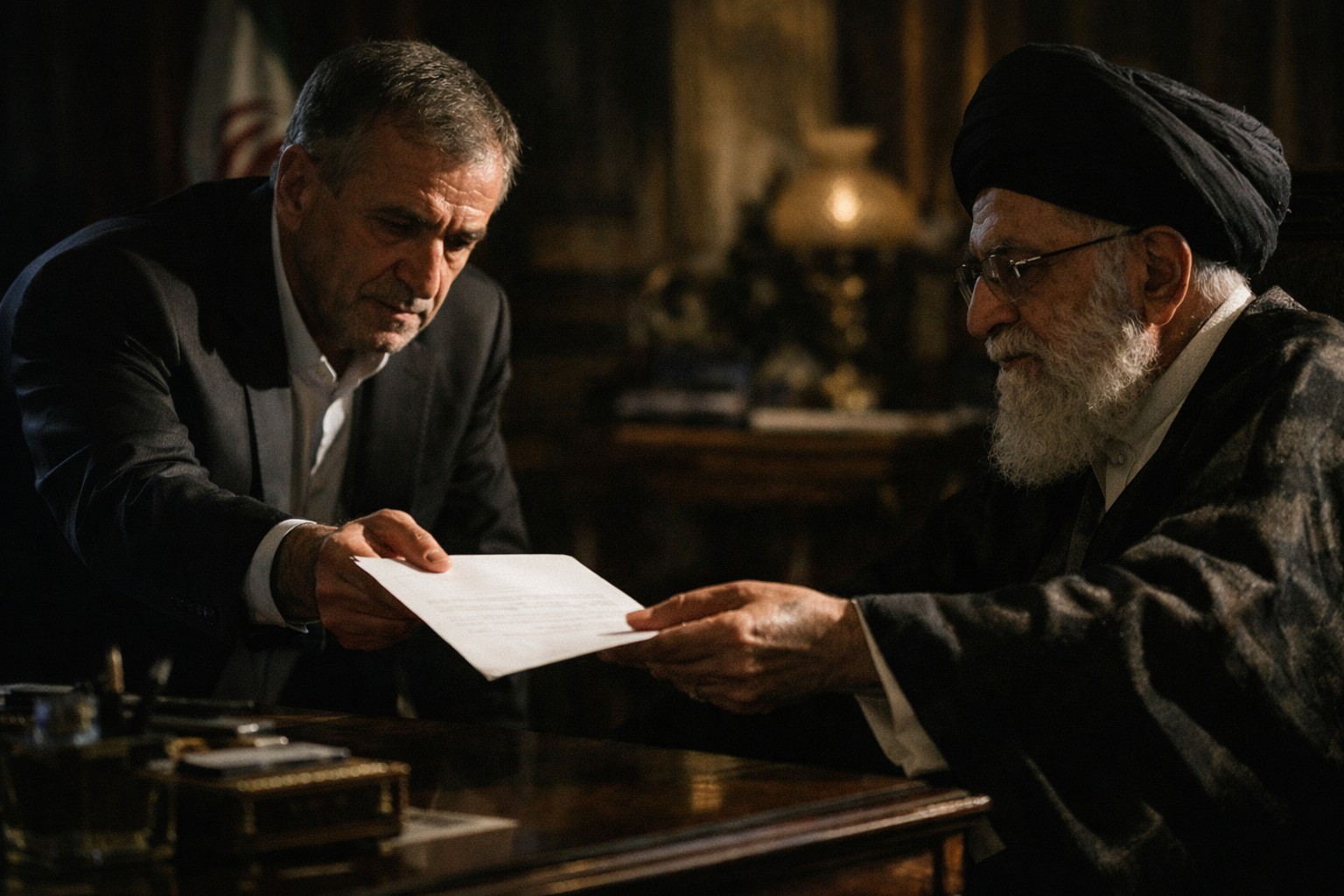
In a significant political development, Iranian President Masoud Pezeshkian has submitted an official letter of resignation to the Office of the Supreme Leader, according to a report by Iran International. The letter reportedly highlights how the president and his government have been sidelined from critical national decisions.
What Happened
Pezeshkian’s letter emphasizes the exclusion of elected officials from key policy areas including security and foreign affairs. The document was delivered directly to the Supreme Leader’s office, a procedural step required under Iran’s constitutional framework. Sources close to the presidency described the move as a formal protest rather than an immediate departure from office.
The development follows months of reported friction between the reformist president and hardline institutions. Pezeshkian won the July 2024 snap election with promises of greater openness and economic relief. Yet many analysts noted early on that his influence would remain limited by the Supreme Leader’s overarching authority.
Background & Context
Iran’s political system places ultimate power with the Supreme Leader, currently Ayatollah Ali Khamenei, who controls the armed forces, judiciary, and state media. Presidents have historically operated within narrow boundaries set by unelected bodies such as the Guardian Council and the Islamic Revolutionary Guard Corps.
- Previous reformist presidents including Mohammad Khatami faced similar constraints during their terms in the late 1990s and early 2000s.
- Hardline resistance has intensified since the 2022 protests following the death of Mahsa Amini.
- Economic pressures from international sanctions have further limited the government’s room for maneuver.
Pezeshkian’s election was viewed by some observers as a controlled opening after the death of President Ebrahim Raisi in a helicopter crash. The new president quickly encountered resistance when attempting to revive nuclear negotiations or ease social restrictions.
Key Players & Reactions
Supreme Leader Ayatollah Khamenei has not issued a public response to the resignation letter. State media outlets aligned with the establishment have so far offered minimal coverage of the report. Opposition voices outside Iran have seized on the news as evidence of systemic dysfunction.
“The letter reflects long-standing frustrations among elected officials who find themselves powerless on strategic matters,” said an Iranian political analyst speaking on condition of anonymity.
Reformist figures inside Iran have expressed cautious support for Pezeshkian’s stand while urging him to remain in office to avoid further instability. Hardliners have dismissed the episode as political posturing that will not alter the country’s direction.
Analysis & Implications
The resignation letter underscores the structural limits of the presidency in Iran’s hybrid theocratic-republican system. Even a president elected with nearly 17 million votes operates largely as an administrator rather than a decision-maker on core issues such as regional military involvement or nuclear policy.
Experts note that formal acceptance of the resignation would trigger new elections within 50 days, a process that could further expose factional rifts. Some analysts suggest the letter may be intended to pressure the Supreme Leader into granting greater leeway rather than forcing an outright exit.
International observers are watching whether the episode weakens Iran’s negotiating position in any future talks with Western powers over sanctions relief.
Regional & Global Impact
Neighboring countries and global powers are assessing potential ripple effects on ongoing regional conflicts. A weakened or transitional Iranian leadership could influence calculations in several arenas.
- Israel and Gulf states may adjust security postures if internal Iranian divisions become more visible.
- European governments engaged in nuclear diplomacy could face additional uncertainty about who holds real authority in Tehran.
- China and Russia, key economic partners, are likely to maintain steady engagement regardless of personnel changes at the presidential level.
Markets have shown limited immediate reaction, though oil traders are monitoring developments for any sign of supply disruption risks.
What To Watch
Attention now turns to whether the Supreme Leader accepts the resignation or persuades Pezeshkian to withdraw it. Key upcoming milestones include the next session of parliament and any scheduled meetings of the Expediency Discernment Council.
- Official confirmation or denial from state media within the next 48 hours.
- Statements from senior clerics or military commanders close to the Supreme Leader.
- Potential signals from Pezeshkian’s reformist allies about plans for a successor candidate.
Further clarification is expected as Iranian officials navigate the delicate balance between public posture and internal power realities.
Disclaimer: This content is aggregated from verified external sources for global news and information purposes only.